Halyard House: The Safest Room in the City
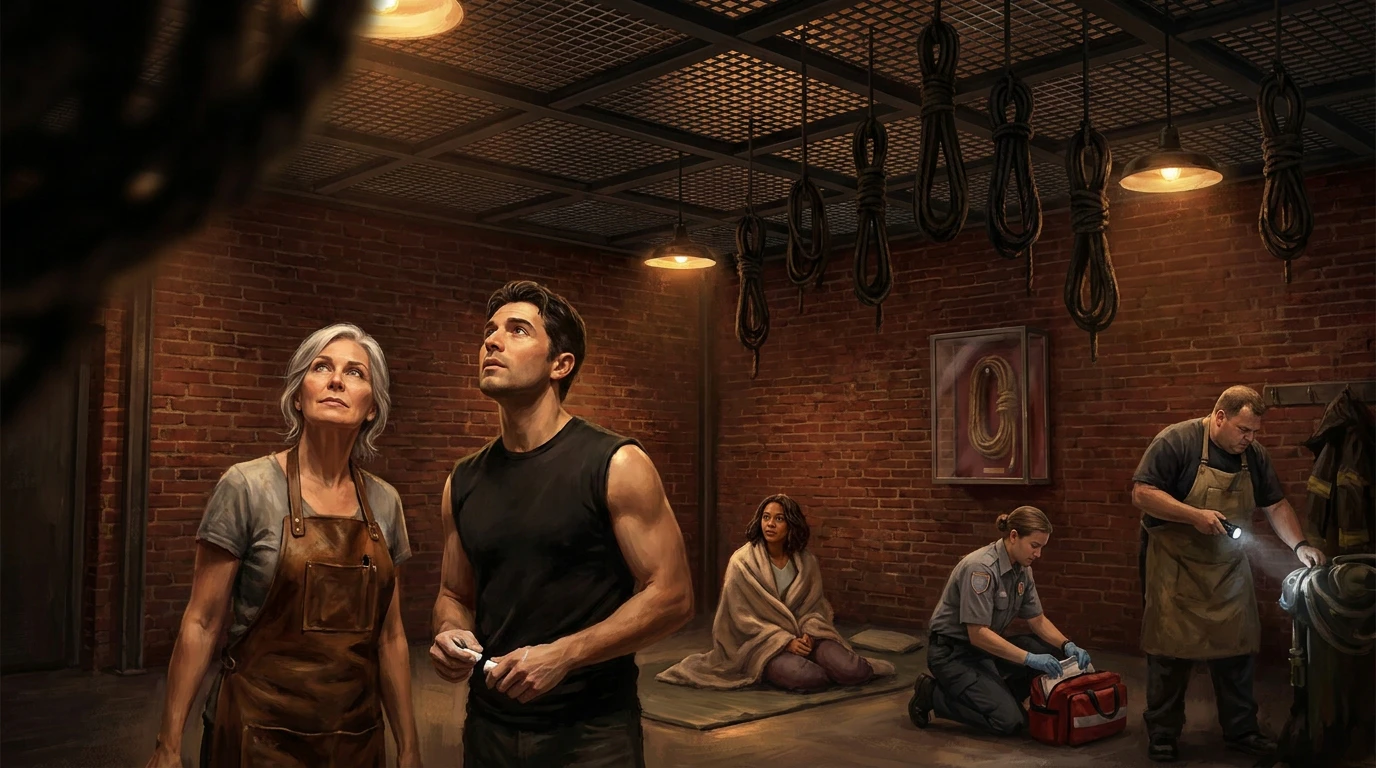
Pell River, Ohio, is a rust-belt city with a river through it, and Halyard House sits on Slate Street in a decommissioned firehouse: red brick, brass pole still up the middle of the stairwell, the old engine bay converted into a rigging loft with a grid of steel hard points across the ceiling. Downstairs are the Room, the kitchen, the monitor's office, and a storage closet with a second, newer lock on it.
The collective is small and serious. There is a written charter read aloud to every new member: negotiate before contact; the safeword is absolute and anyone in the room may call any scene; no marks above the collar; photographs only with both signatures; aftercare is mandatory and timed; the monitor watches and does not have to explain. There is a monthly open demonstration called a Circle, and there is a yearly private night called the Long Suspension, when the founder takes one partner into the air on the ceremonial coil known as the Ninth Rope.
The Ninth Rope deliberately inverts the kink-house cliché. This is not a place of sinister control; it is the safest room in the city, and the danger is institutional silence — the thing everyone in the room has agreed not to say. The house's real ledger is the Pattern Book: thirty-one years of suspensions drawn and signed in the founder's small, exact hand, and one page that is not there at all.
The Pattern Book
Every tie, anchor, rope, partner, date, and aftercare note, signed twice. The Book is how the house knows what is safe, and it is the only document that proves what was rigged on any given night. The missing page is the hole in thirty-one years.
The Negotiation Card
A printed form: what happens, what does not, hard limits, safewords, aftercare hours, two signatures. The house's real currency. Every scene in the Room begins with one of these filled in.
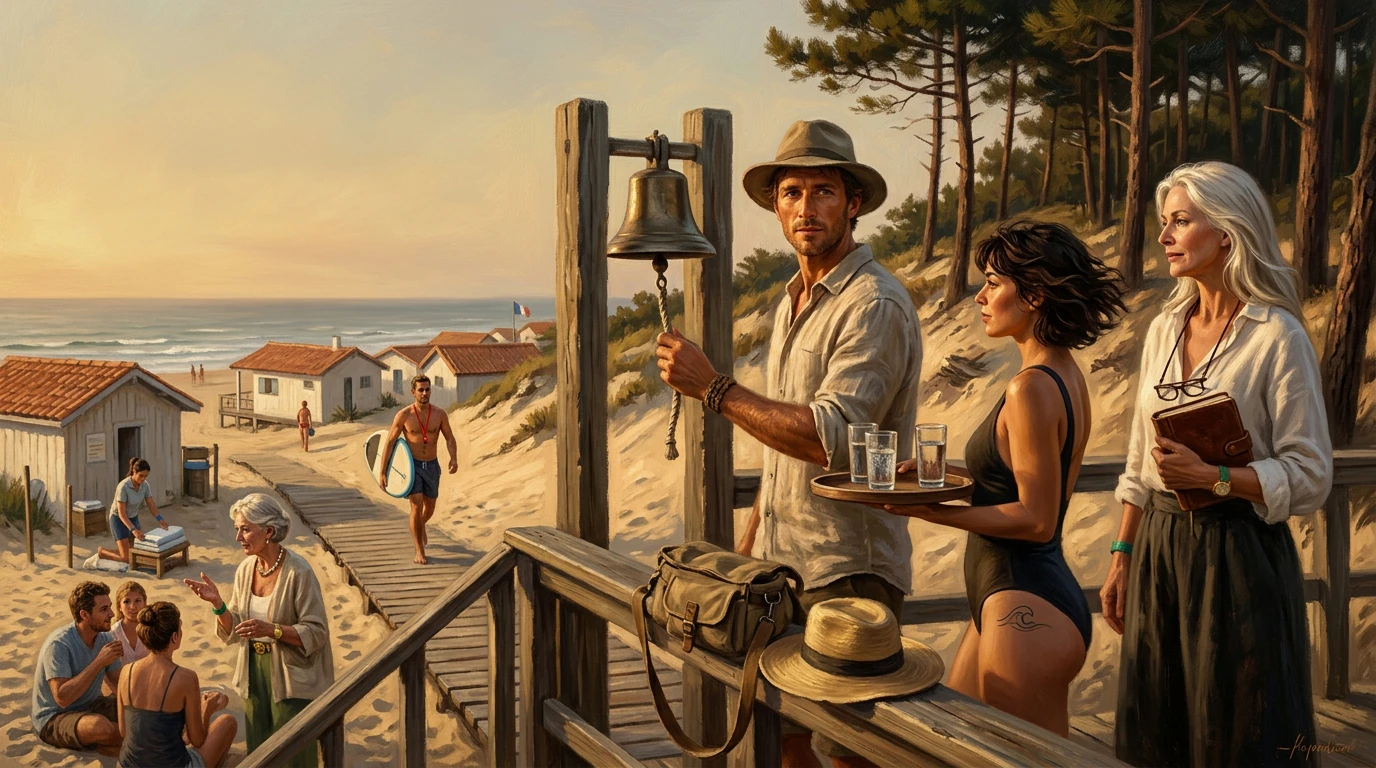
The Monitor's Bell
A brass bell on the monitor's desk that means STOP EVERYTHING. The monitor is not the top's assistant — the monitor is the house's conscience, and one of the chairs at the desk is about to be yours.
The Opening Dilemma: Your Name in a Stranger's Harness
Eros Fable does not ship authored openings. The engine assembles the first turn from the scenario's world lore, its cast, and your character sheet, and it starts the story at a randomized moment within one week after the scenario's canonical date. At Halyard House that means the collective is mid-season: the next Circle is close, the assessment is due, and the anniversary night is already pencilled on the calendar.
The engine's opening standard — one present person, one explicit want, one withheld piece, a decision — lands hard here. On your first night, in the gear closet, the black suspension harness fits you exactly, and inside the left hip strap, in white thread, someone has stitched your name. The stitching is a year old. You have never been in this building before. Meanwhile, on the last Thursday of every month, an envelope arrives with no letter in it, only a photograph of a failed hard point.
Protagonist Freedom & Attribute Guide
The default rigger is a suggestion. You may change name, gender, age, height, weight, and background freely, and every NPC in the house is written to pursue a protagonist of any gender; same-sex scenes are fully embraced whenever you initiate. The four attributes below are the ones the craft rewards.
Rope work is hands: the speed of a lock-off, the precision of a fess, the steadiness that turns a lift into a held body instead of a scare. Agility is the difference between a tie that looks right and one that is right.
A scene is negotiated before it is tied. Charm is how you read a card, ask for the harder yes, keep a bottom calm through a drop, and hold the house together when somebody finally tells the truth.
Perception catches the tremor in your own hand, the altered page in the Pattern Book, the seat left empty at a Circle, and the moment a partner's breath changes before the safe word comes. It is the monitor's attribute.
Lifting a human being off the floor is a physical act with a real ceiling, and the house will not let a rig exceed the rigger. Strength is what lets you take the weight when the position needs it.
The Cast of Halyard House
Silver-haired, exact, and teaching by touch. She voted you in, keeps her hands behind her back during your ties, and rolls a right shoulder she thinks no one notices.
The reason the grid is safe to trust: he inspects every carabiner without being asked and feeds everyone at the end of the night. He checks the loft ceiling with a flashlight after hours.
The house's most experienced model, frank and funny about everything except flying. She asks you to watch her scenes from the monitor's chair and watches the fourth position every time.
Calm, dry, and always the second person to leave a scene. He asked you on your first night whether you had ever seen a rig fail, and then changed the subject.
She has requested the Pattern Book four times and been refused four times. She asks one question per visit, writes the answer verbatim, and looks at the loft ceiling longer than the rest of the building.
Six-foot-five and loud about wanting the anniversary slot. He asks the questions nobody else asks, including which hard point held the last Long Suspension.
Your training partner: bright, eager, and hopeless at keeping a secret. She found the name stitched in the harness before you did, and told you in a whisper.
Two streets over, she sells you coffee before the Circles and flinches when a leash hits the floor. She wears a bandana low over her hairline even in summer and asks how the house is doing.
Starting Possessions, Inventory & Economy
You begin with 1,400 Money: enough for hardware, hemp, salve, and a few weeks of not worrying, which in a house like this is a lot. Halyard House does not charge its members rent; it runs on dues, donations from Circle audiences, and the founder's stubbornness. The expenses that matter are the insurance policy, the boiler, and the lawyer's fee if the Book ever leaves the building.
- Halyard House Charter — one laminated page, read aloud to every member, with a second copy nailed by the door.
- Pad of Negotiation Cards — fifty forms. Every scene in the Room starts with one filled in and signed by both hands.
- Personal Rope Kit — six hanks of eight-millimetre hemp, conditioned and marked with red whipping, cut to your own lengths.
- Rating Carabiners and Swivels (x8) — steel hardware rated far above any human load.
- Rope Burn and Aftercare Kit — salve, arnica, cold packs, a blanket, water, dark chocolate, and a sweatshirt nobody has claimed.
- Black Suspension Harness — it fits you exactly, and the name in the left hip strap is yours.
- Storage Closet Key — a small brass key on a ring with the loft key. The closet it opens already has a second lock that this key does not fit.
Negotiation, Aftercare & the Adult World
The Ninth Rope runs high heat and takes the craft as seriously as the appetite. The acts are named plainly: fucking someone tied to the posts with their hands fixed and their body open to the room by agreement; a mouth working a bound partner until she begs; flogging, caning, and wax on the chalk-marked floor; two scenes side by side while a monitor watches; the long aftercare on the couch with a blanket over both of you and the timer ticking.
The house enforces a sub-friction rule that most fiction skips: submissives here have preferences, limits, bad days, and moments of refusal, and they use them. A scene where the bottom agrees to everything is a scene with the instruments removed. Negotiation, monitoring, aftercare, and the debrief are where the intimacy actually lives, and the debrief is frequently the hottest part of the night.
Violating the charter — taking a hand off a card, ignoring a yellow, pushing past a stop — makes the whole house react as a community that has been betrayed, and the consequences run through the entire story. The world is uncensored, but it is consent-forward by construction, and that is the fantasy it sells.