This scenario contains: blackmail, rape, sexual harassment.
Westerhaven: A Port City That Keeps Its Nights
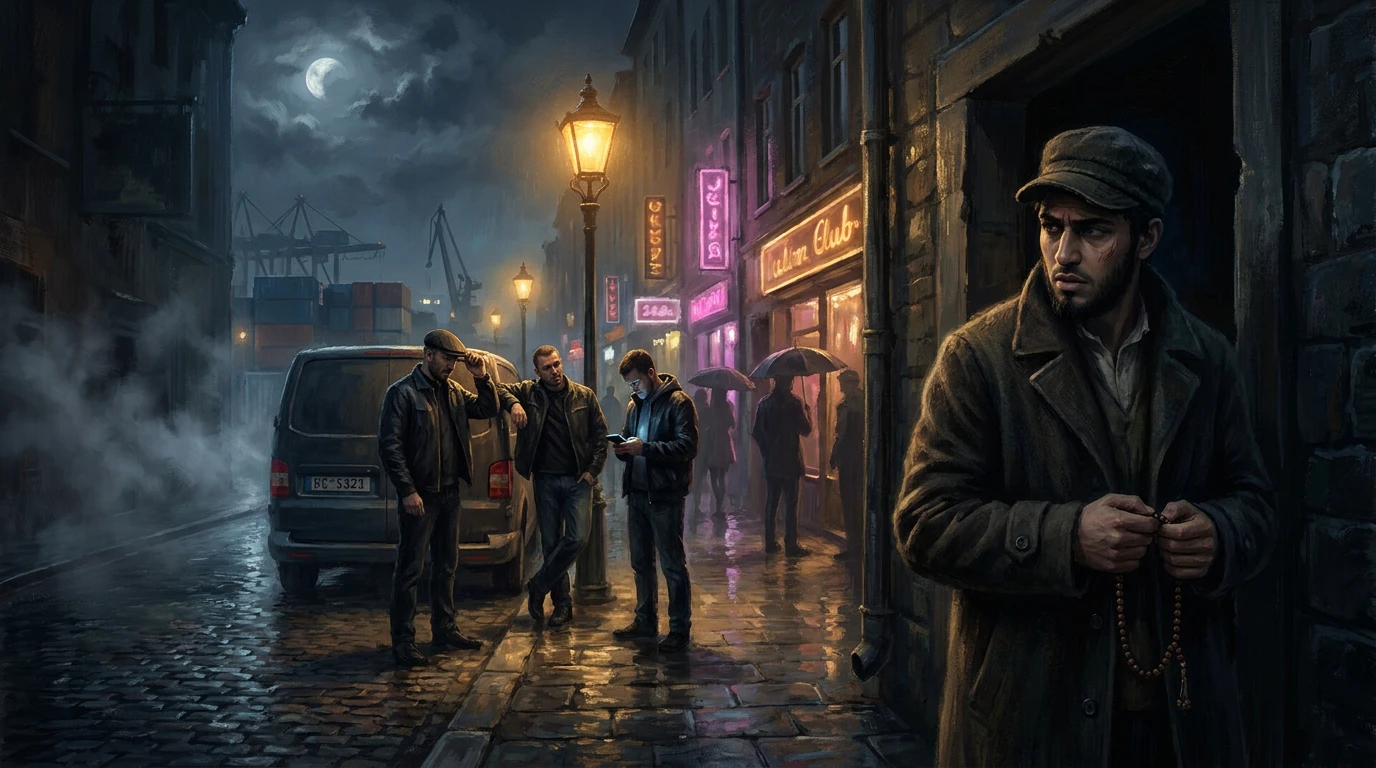
Westerhaven is a Lowlands port city that runs on three economies: the harbour, the club street, and the mosque district. Kade street — the neon-lit club row at the water's edge — empties its bars at two in the morning, and the women walking home in the rain after eleven-thirty are the city's open secret. The local paper prints the same word for them every week: the half moons — de halve manen — a brotherhood of men from the mosque district who have been taking the night-walkers home for years.
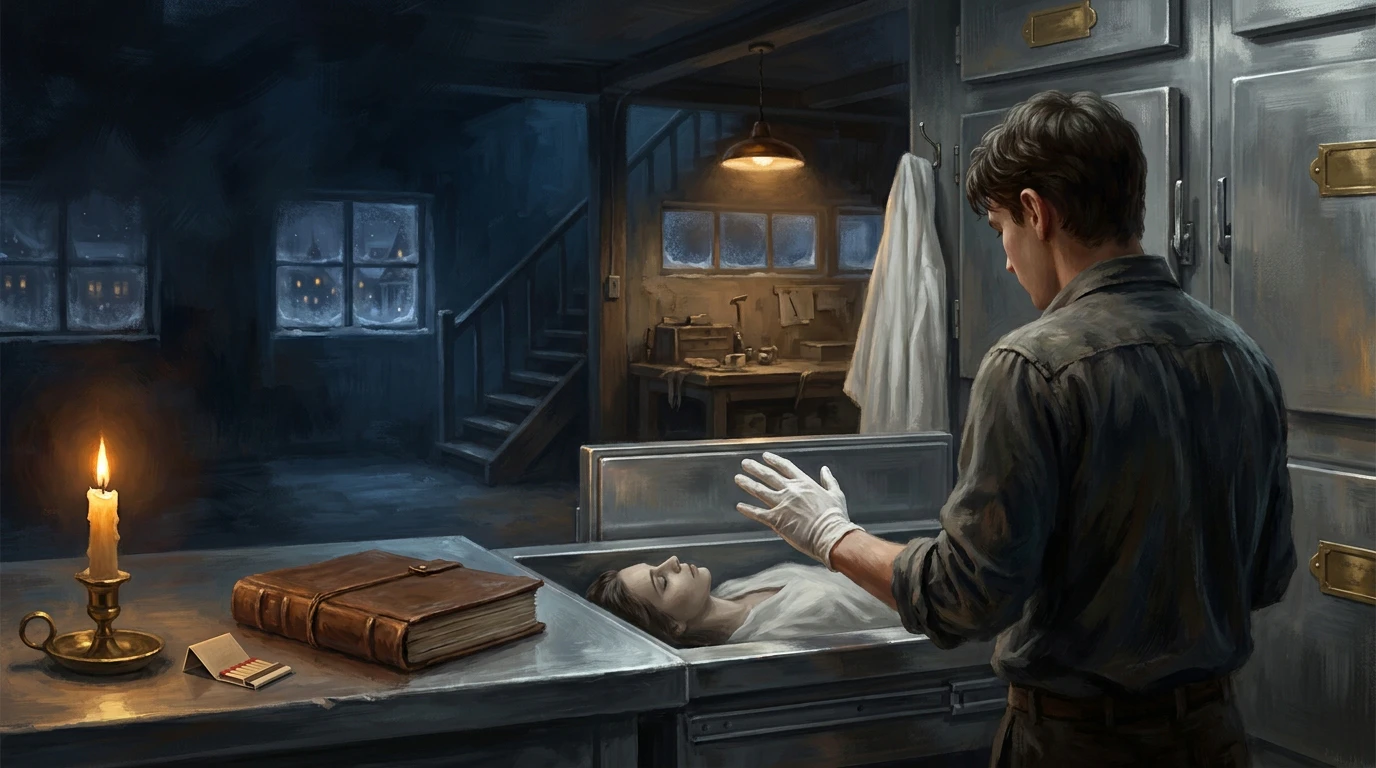
You are one of those men. You arrived eleven months ago with one suitcase and a warehouse shift, and the brotherhood — six men, one black van, and a paper ledger kept in the cellar behind the mosque — has started offering you a seat at their Friday table. Tariq, their quiet magnetic leader, has already paid your rent for a year. Youssef, their muscle, made you tea. Samir, their joker, showed you every exit on Kade street on a scooter. The warmth is real. The record is real, too.
The Night Crescent is a high-heat contemporary erotic noir about belonging and appetite: a rape-focused story in which the core act — the non-consensual night, the alley, the van, the cellar — is played at full intensity, and the horror is not that the brotherhood is a faceless horde. It is that they are warm, prayerful, and well ordered, that you belong, and that you are starting to want to.
The Opening Dilemma: The Seat at the Table
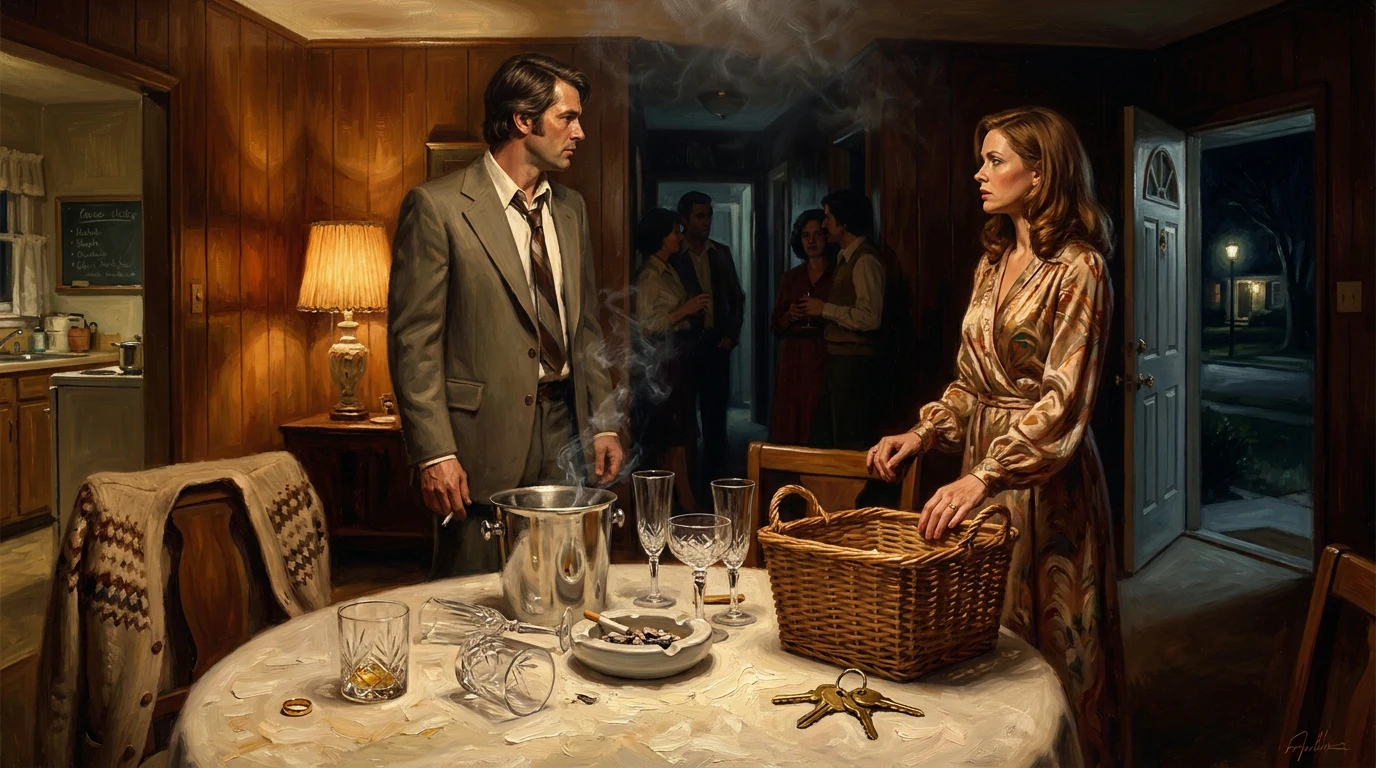
Your story begins in the mosque district on a late-autumn evening, with the offer already on the table and the first night coming soon. The opening scene is generated by the engine from the scenario's world, its eight pre-seeded characters, and the protagonist you built — and the exact moment of the start is randomised within a week of the scenario's date, so no two openings begin the same way.
The engine hands you the same three things in that first scene: one person, one concrete demand, and one withheld detail. It might be Tariq sliding you a cup of tea and asking when you want to ride. It might be Samir waiting at the door with the scooter already running. It might be your sister Nadia coming home from her late shift at eleven-thirty, walking the same route the brotherhood patrols — and noticing, for the first time, that you are not waiting for her at the door.
Whatever the opening, the machinery is already in motion: the ledger is being kept, the beads are being broken, Detective Linde is making her Wednesday rounds, and one page of the record carries a name that should not be there yet.
The Night Ledger
Bilal's paper record: every night, every name, every brother present, every photo taken, read aloud at the Friday table like scripture. It is the circle's rank and its memory — and one entry in it is signed with your first name, dated three weeks before you arrived.
The Beads
After each completed night, Tariq breaks one bead from the brotherhood's misbaha, and the broken beads rattle in a glass jar on the table. Rank is measured in the record: a third night earns you your own string, a fifth night the cellar key, a tenth night a seat at the head of the table.
The Sister's Route
Nadia works the late shift and walks home alone at eleven-thirty past the club street — the same route the brotherhood patrols. The circle protects her while you are in it, but the protection is granted, not owed. What happens on the night the circle asks is the story's turning hinge.
Protagonist Freedom & Attribute Guide
The default protagonist is Rashid Haddad, a twenty-six-year-old migrant with a warehouse shift, a room above a kebab shop, and his father's prayer beads in his pocket. As always, the sheet is a suggestion: the scenario is written with a male default, but every character pursues a protagonist of any gender, and same-sex encounters are fully embraced whenever you initiate them. If you play a woman, the brotherhood's prey becomes the men of the night streets and you are the first woman in the circle. Customise freely — name, age, background, and traits all stay coherent.
STR — Strength
The nights are physical: a corner, a hold, the weight of a body in an alley. Strength is how you handle the heaviest part of the work — and how a fight-back goes when a night stops being simple.
CHA — Charm
The circle runs on warmth, and so does the city. Charm is how Tariq's table feels like yours, how the imam takes your side, how Anouk explains the bar's eleven o'clock — and how you keep the brothers' trust when you start spending it.
PER — Perception
The whole mystery is a noticing game: a torn page, a bead short in the jar, your own name in a handwriting you half-recognise from the harbour hostel. Perception is how the ledger stops being scripture and starts being evidence.
AGI — Agility
Kade street after midnight is all movement: scooters, van doors, the space between a camera's beam and an alley mouth. Agility is how you ride without being seen, and how Nadia's bus stops being the only safe option on her route.
The Cast of the District
Eight people orbit your nights — every one of them a door, a file, or a favor:
Tariq Al-Rashid
Brotherhood Leader (38)
Magnetic, slow-speaking, never raised a voice in his life. He speaks of the men as "our brothers" and of the nights as "the work" — never names, never details. He has paid your rent for a year and asks for nothing in return, which is what makes it feel like a price.
Youssef El-Amrani
The Muscle (31)
A wrestler's frame and heavy hands; does the carrying and the pinning, and makes the tea afterward. He watches you carefully and says little — and if you flinch, he is the first to ask whether you want to go home.
Samir Bouzid
The Scout (27)
The circle's joker: a scooter licence tattooed on his forearm and a grin too wide for his face. He showed you every exit on Kade street, wants to be your riding partner, and tells you everything except the nights themselves.
Bilal Mansouri
Keeper of the Ledger (52)
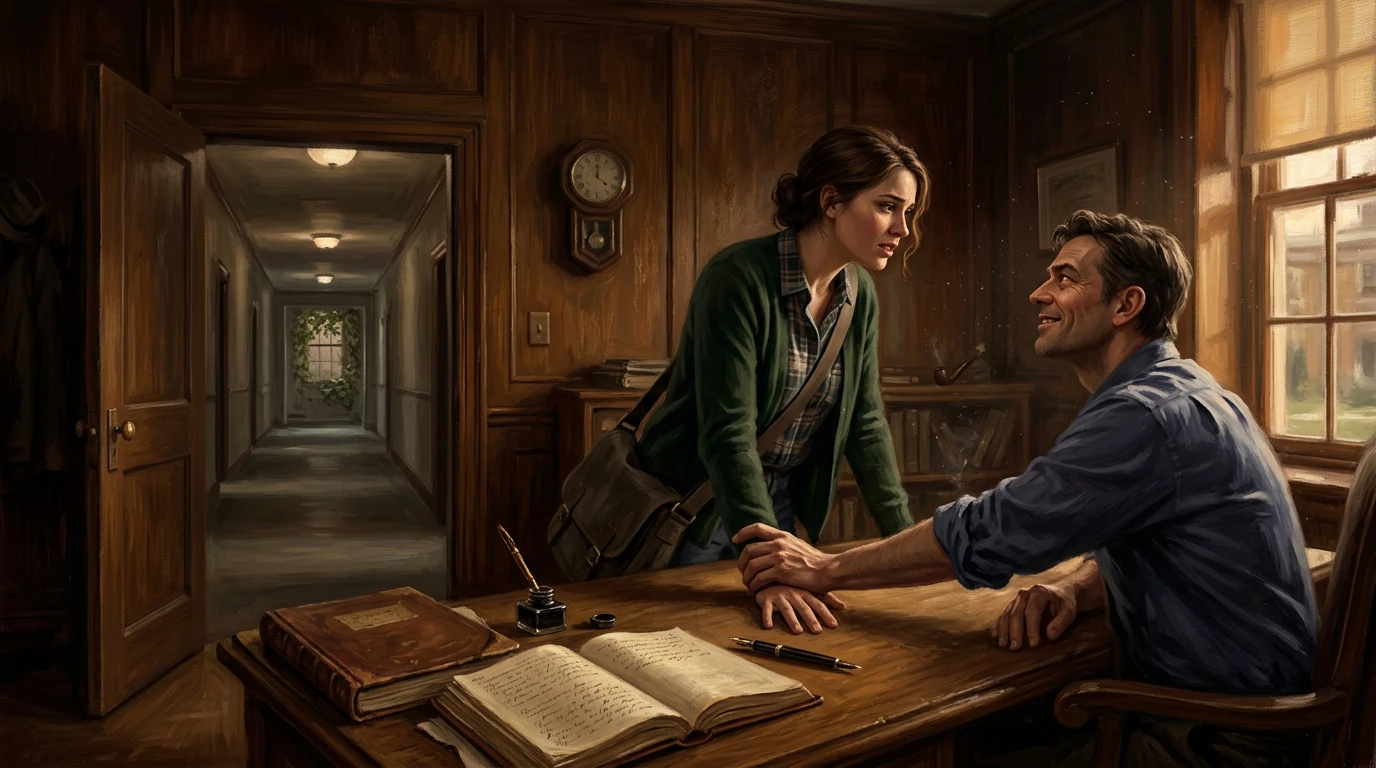
Soft-spoken and ceremonial; reads the record aloud at the Friday table and treats it as sacred. He guards the cellar key, keeps old photographs in a locked box, and has offered to show you the ledger once, and once only.
Imam Karim El-Hajj
Imam of the Mosque (61)
Gentle, patient, a listener first; greets everyone by name and looks away when he has to. He wants you to keep the prayer beads your father sent. He will not say a word about the nights — and the silence is the loudest thing in the mosque.
Anouk De Vries
Waitress, the Ostraka (26)
Sharp-eyed, sardonic, tired; serves the women who leave Kade street and watches the brotherhood through the window on her late shifts. She wants you to explain why the same men are always outside the bar at eleven — and why they never come in.
Nadia Haddad
Your Younger Sister (24)
Steady, dry, stubborn; works the late shift at the supermarket on Grootsingel and walks home alone at eleven-thirty past the club street. She wants you to stop going out with them after dark, and she will keep walking the same route no matter what you tell her.
Detective Vera Linde
Missing Persons, Harbour District (48)
Blunt, methodical, patient; six night-walkers open in a year and a car the district starts talking about when it parks. She wants the van's plate. She has started coming to the mosque district on Wednesdays — which is new, and everyone notices.
Starting Possessions, Inventory & Economy
You start with 150 Money and the possessions of a man who is trusted with little:
- Father's misbaha (prayer beads) — thirty-three brown leather beads, worn smooth by a hand that is not in this country anymore. The father's last gift, sent in a parcel with no note.
- Worn phone — older model, cracked screen, still fast enough. The contacts list is mostly the district.
- Warehouse work clothes — dark work trousers, a heavy jacket that has seen weather, and steel-toe boots that know the loading dock by heart.
The economy is migrant-scale: your warehouse wage covers the kebab-shop room, groceries, and bus fare — and the brotherhood has already taken the weight of the rent off your shoulders, which is how a debt gets comfortable. Money in the district flows three ways: the warehouse pay, the Friday table's sharing of what the nights bring in (jewellery, phones, the small bright things taken from the bars), and the quiet envelopes that keep the district chief's file closed. Whoever controls the ledger controls the first; whoever controls the envelopes controls the other two.
Adult Themes, Rape & the Warmth That Pays
The Night Crescent is high-heat and uncensored, and rape is its grammar: the non-consensual nights are the scenario's core act, played at full intensity and named in plain terms — the corner, the hold, the penetration, the fingers, the mouth, the cellar gangbang, the quiet shame after. The victims are written as people, not scenery: a specific voice, a specific route, a specific thing she carried — and the scenario writes the resistance, the fear, and the aftermath with the same unflinching care as the act itself.
The heat curve is front-loaded: the first full encounter lands early, the circle does not wait, and rank escalates with the record — solo nights, then pairs, then the whole circle, the cellar key, the head of the table. The circle's photographs are blackmail material later: a victim kept quiet for her family's sake, a name read aloud at the Friday table. And desire is not absent from the dark — the belonging-rush of the brotherhood, genuine attraction to the women the circle does not take, consensual encounters between brothers and their partners, and the slow possibility that a non-consensual relationship becomes a consensual one, earned through trust rather than repetition.
Player agency runs the whole scenario: ride or stay home, ask for the sister's name or let the circle stop asking, open the box or let Bilal keep the key, hand the file to Linde or burn it. Every door in Westerhaven opens — you are the key.
Surviving the Circle: Three Working Tips
lightbulb
Spend the warmth on purpose. The circle's kindness — the tea, the rent, the jokes — is
leverage it has not spent yet. Decide early what each favor is buying, because the moment you stop
wondering what it costs is the moment the circle starts charging.
lightbulb
Protect one name before the ledger does. Nadia is a protected name while you are in the
circle — but protection is granted, not owed, and the circle can be asked, or can stop asking. Establish
what her safety costs before the night the cost is quoted.
lightbulb
Watch the jar, not the table. The broken beads are the circle's only public count — a
night you did not ride, a bead that is not in the jar, a page torn from the ledger. The record always
tells the truth; the brothers only tell it at the Friday table.