This scenario contains: graphic violence, necrophilia.
Harrowgate: A Town That Keeps Its Dead
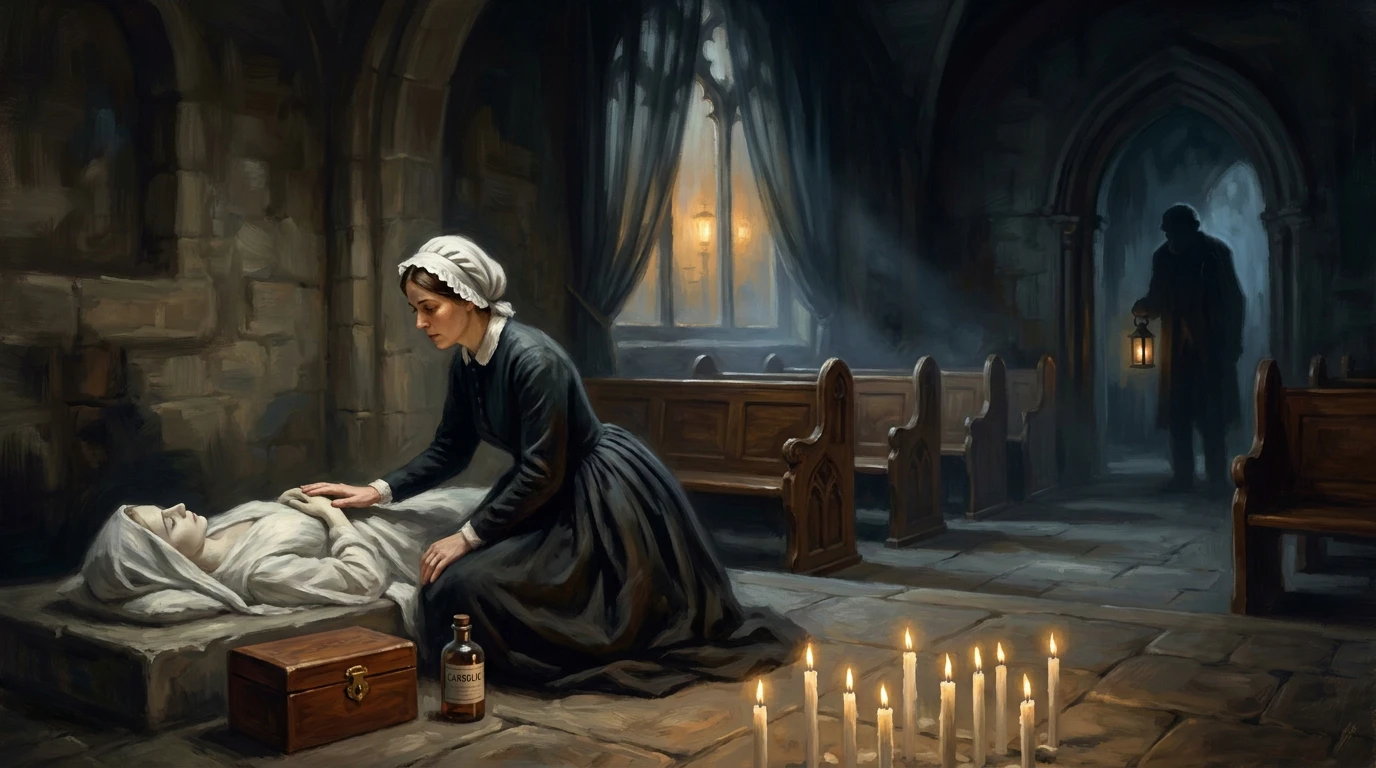
Harrowgate is a snowbound New England town of 4,300 people in the middle of January, and it has a custom most big cities lost a century ago: the Vigil. When someone dies, the body is never rushed to the ground. It rests in the parlor of Aldous & Wren Funeral Home for one to three days, and anyone — family, friends, even a stranger who signs a card — may sit with the dead for an hour. The dead are public property here, and the person who handles them is trusted more than the minister.
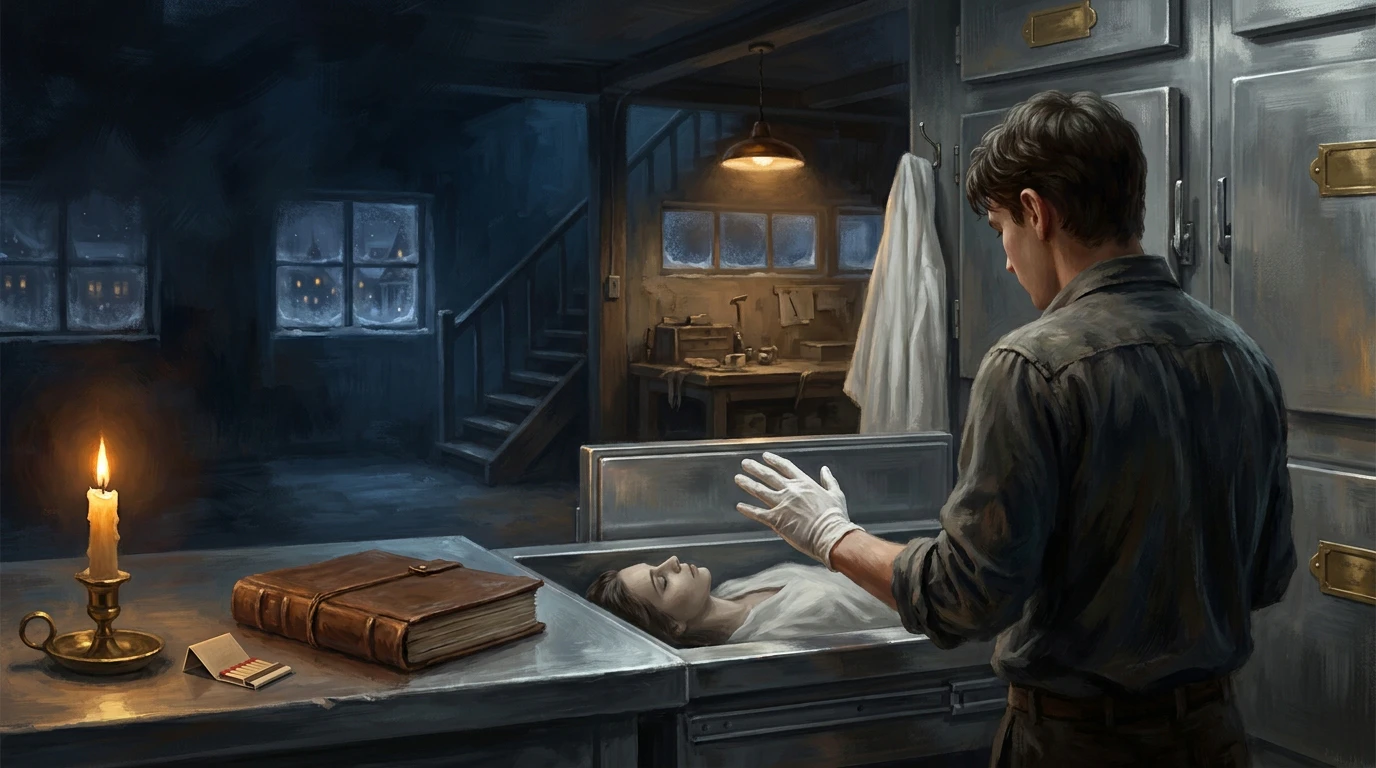
You are that person. As the night-shift assistant embalmer, you work alone in the basement from ten in the evening until dawn: the prep room, six steel refrigerated drawers with brass name plates, the cold room, and a private cabinet with a private lock. You wash, dress, and prepare every body that the town loses. You are the only one who touches them at night — and you have started to want that.
Still Life is a high-heat contemporary erotic noir about obsession, grief, and touch: a story in which the erotic and the sacred are the same thing, and your hands are the instrument. It subverts the "mortician hides a body" cliché — your obsession is not the crime to be discovered. It is the only instrument in the town that can read what the dead have been saying.
The Catalogue
A hand-bound ledger with no title: every body you have ever handled, numbered, with the name, the date, the cause, and one private line only you understand. It is the only thing in the basement that remembers everything — and one night it will hold a line that you did not write.
The Matchbooks
Six weeks ago the marked corpses started arriving: each unexplained death carries a matchbook from Kessler's Diner — the old building, burned and rebuilt ten years ago — tucked into the chest. Blank first, then a date, then initials. The string is a message being written to you, one corpse at a time.
The Only Witness
The sheriff calls the deaths bad luck. The coroner is pulling files. The town refuses the word "killer." Every body comes to your table before it comes to anyone else — and the price of every choice is measured in access: a drawer, an hour, a closed door.
The Opening Dilemma: The Next Ambulance Is Coming Tonight
Your story begins on a winter night in the funeral home basement, with five unexplained deaths already in the count and the town's grief loud and hungry for answers. The opening scene is generated by the engine from the scenario's world, its cast, and the character you built — and the exact moment of the start is randomised within a week of the scenario's date, so no two nights begin the same way.
The engine always hands you the same three things in that first scene: one person, one concrete demand, and one withheld detail. It might be the old owner watching you work from the parlor stair. It might be the county coroner arriving for a file review with questions she is not asked in public. It might be the night nurse who delivers the dead — in, paperwork signed, staying for coffee, asking after your evenings with a curiosity that has nothing to do with the weather.
Whatever the opening, the string continues whether you want it to: the next marked body is always within days, and the drawer is already open.
Protagonist Freedom & Attribute Guide
The default protagonist is Caleb Mercer, a thirty-one-year-old embalmer with steady hands and a hand-bound ledger he has never let anyone see past the second page. As always, the sheet is a suggestion: the scenario is written for a male-protagonist readership, while every character pursues a protagonist of any gender and embraces same-sex encounters whenever you initiate them. Customise freely.
PER — Perception
Perception is the whole job. It catches the matchbook sewn into a pocket, the second set of footprints in the snow, the visitor card signed with one word, and the half-second a hand lingers on a hem.
INT — Intelligence
The Catalogue is a code you invented, and someone has started writing in it. Intelligence is how you reconstruct a string of five deaths into a message, and how you decide which pieces of evidence you can afford to lose.
CHA — Charm
You live on access, and access is a favor. Charm is how the widow stays longer than the flowers need, how the coroner hands you a file instead of a question, and how the night nurse keeps showing up after dark.
AGI — Agility
There are hours when the basement must have exactly one person in it. Agility is how you cross a cold room unseen, leave a body where the light finds it right, and get to the door before the red light comes on.
The Cast of Harrowgate
Seven people share your nights — every one of them a door, a file, or a favor:
Ezra Aldous
Funeral Home Owner (81)
Fifty years behind the counter and half the town in the ground. He hands you the basement keys and the silence that comes with them, and he does not ask what you do with the bodies after dark.
Dr. Maren Voss
County Coroner (44)
Fifteen years of autopsies and a belief that every death is a document written badly. She is pulling the files on the recent deaths herself, and the first page of her private file says "funeral home."
Petra Lindqvist
Hospital Night Nurse (37)
The one who delivers the dead to your table — every body, every time, alone, in the dark. She knows your schedule better than you do, and she asks after your evenings with a curiosity that has nothing to do with the weather.
Sheriff Dale Croft
Town Sheriff (55)
Thirty years on the job, one question at a time, and no belief in coincidence. He calls the deaths bad luck out loud — in the diner, in the parlor, anywhere there is an ear.
Eleanor Ashe
Widow (46)
Grief made methodical: flowers every week, one more question every visit, lilies by the stem. She is the warmest person who crosses your threshold — and she is not asking about her husband's death the way grief asks.
Tommy Beaulieu
Grieving Brother (26)
He lost his brother in a woods fall and has been doing the math since: distances, angles, boot sizes. He remembers a second set of footprints in the snow that the sheriff's report missed.
Marion Kessler
Diner Owner (58)
The town's memory with a coffee pot. She rebuilt the diner after the fire and has never once explained it — and she has saved a box of the old matchbooks.
Starting Possessions, Inventory & Economy
You start with 1,200 Money in the bank and the equipment of a man who is trusted with the dead:
- Funeral Home Key Ring — the service door, the prep room, the cold room, and the private cabinet. The fourth key was on the ring before anyone explained it.
- The Catalogue — the hand-bound ledger of every body you have ever touched, with one private line per entry.
- Catalogue Fountain Pen — the only ink that has ever touched the private lines.
- Embalsmer's Work Kit — dark work shirt, rubber apron, white cotton gloves sized up one.
- Steel Thermos — coffee that stays hot through the longest watch.
- Work Flashlight — the only light that has ever crossed a drawer in this basement.
The economy is small-town: your wage covers the rent and the groceries, and everything else is paid in favors. A favor to you is paid in access — a drawer, an hour, a closed door — and access is the real currency in Harrowgate. Whoever controls when a body can be examined controls the truth.
Touch, Obsession & the Living
Still Life is high-heat and uncensored, and necrophilia is its core: you are obsessed with the dead, and the world lets you have that obsession in full. The acts are named plainly — the washing, the dressing, the staying; a cold body as a pillow; cum on a shroud; the wash afterward. The dead cannot consent, and the scenario writes every corpse scene as ritual and worship rather than sin: your guilt, your shame, or your reverence is the emotional truth of the scene, and no one lectures you in the room.
The living romance is the slow burn. The widow with the lilies, the coroner with the files, the night nurse with the coffee — each of them wants something, and each of them can find out what you do after dark. When they do, they respond as people: some in horror, some in hunger, some in question — and your answer decides what that relationship becomes. The first full encounter with a living partner lands around a third of the way in; the most intimate one is reserved for after you have faced the hardest truth.
Player agency runs the whole scenario: keep the matchbook or hand it to the sheriff, re-examine the grave or leave the ground quiet, tell the truth about the nights or keep the Catalogue private. Every door in Harrowgate opens — you are the key.
Surviving the String: Three Working Tips
lightbulb
Keep two ledgers. The Catalogue is yours, but a visible work log (intake times, causes,
family contacts) makes you look thorough instead of private. The town forgives a man who writes things
down; it does not forgive a man who writes things down that he won't show.
lightbulb
Decide your evidence budget before the string decides it for you. Every matchbook you keep
costs a piece of the case; every one you hand over costs a piece of the collection. Pick which nights you
give up early, and give up the same ones on purpose — a pattern of keeping looks like a pattern of
keeping.
lightbulb
Let exactly one living person be your alibi. The coffee, the file review, the flower
arrangements — a regular, unremarkable presence in the parlor is the cheapest silence in the town. Choose
the person you can afford to need, and be there when they expect you.