This scenario contains: graphic violence, necrophilia.
St. Cuthbert's: A Hospital at the Centre of a City That Kills Its Women
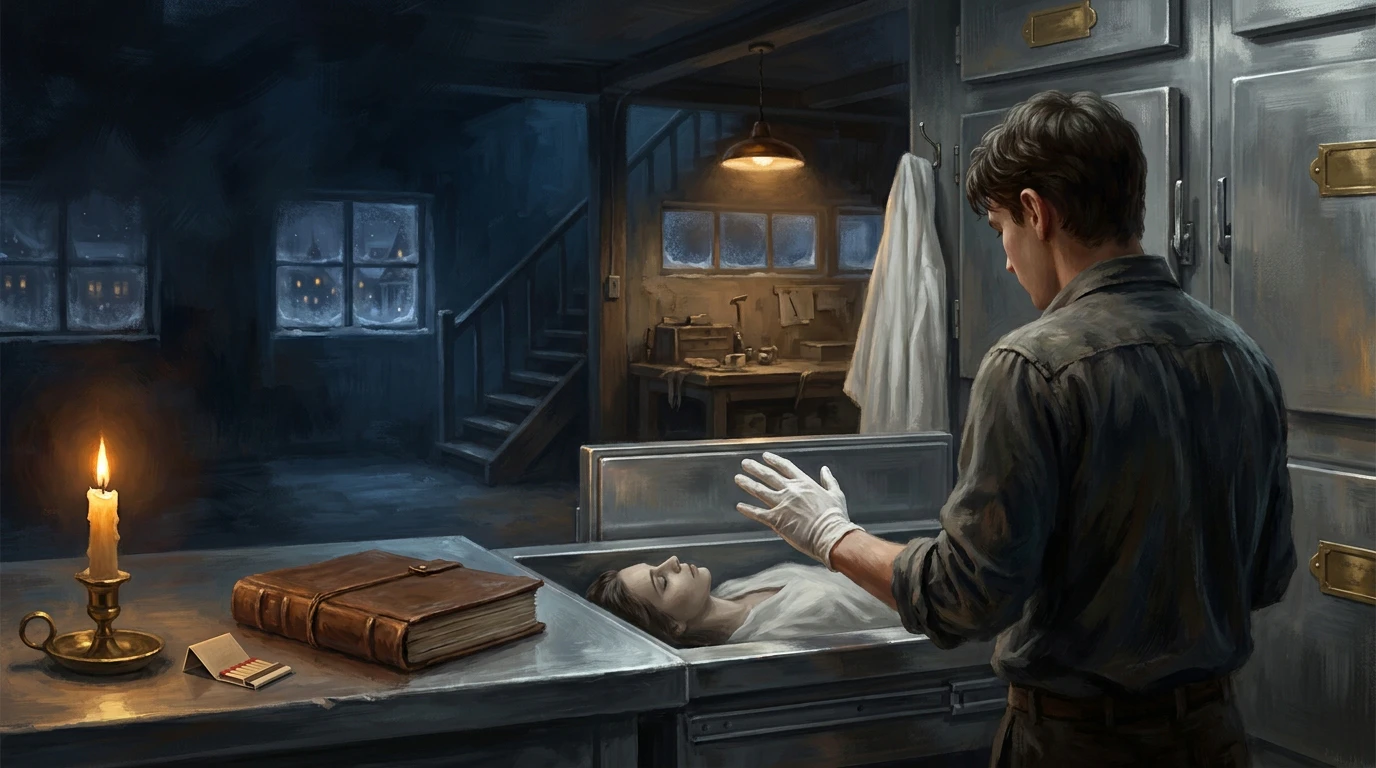
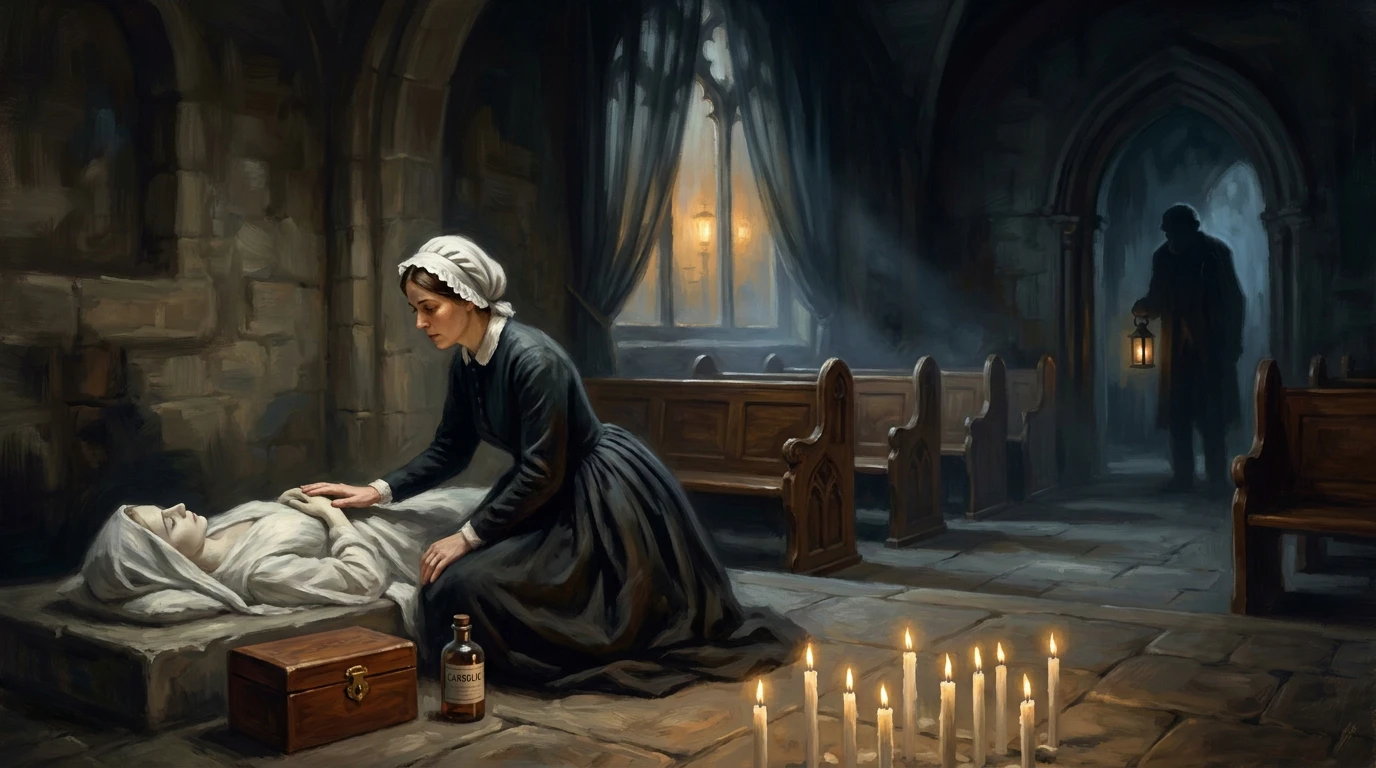
London, the east end, late November 1891. St. Cuthbert's Hospital for the Poor is a red-brick block of wards around a yard with a well — the general ward, the women's ward, a yard with hanging sheets, the washroom, the chapel of ease (the unclaimed morgue: stone floor, oak pews, a slab, a tall arched window onto the fog), and the nurses' lodge with your narrow bed and your washstand.
You are the night nurse. From ten in the evening until dawn, the ward belongs to you: the sick, the dying, and the dead. You are the first to know when a woman stops breathing, the first to wash and dress her, and the one who lays her out in the chapel before anyone claims her — and most of them are never claimed. The poor die unclaimed, and the chapel is where the city's forgotten are kept. This is your supply, and it is also your shame.
Outside the walls, the Baker Street Butcher has killed four women in three months, and all four touch the hospital. Inside, the dead keep arriving with a black glass button sewn into the hem of their dresses — a button from a uniform St. Cuthbert's stopped wearing in 1888. The Chapel of Ease is a high-heat Victorian gothic of touch, silence, and what the dead say: a story in which the erotic and the ritual are the same thing, and your hands are the instrument.
The Keepsake Box
A small cedar box with a brass clasp, under your pillow in the lodge: one token taken from each unclaimed dead — a plain silver ring, a brass button, a folded letter with no address. It is the only congregation you have ever belonged to, and you have begun taking more than one.
The Three O'Clock Round
The dressing ritual: walk the ward, check the dying, and when a woman has stopped breathing, wash and dress her by candlelight before she goes to the chapel. The killer's message is sewn into the bodies one letter at a time — and the dead speak only while they are being dressed.
The 1888 Fire
Thirteen years ago the old infirmary burned, and three patients died in the locked chapel of ease. The key was in the chapel-keeper's hand; the order to lock the door came from the matron's chair. No one was punished. The fire is the hospital's first secret — and the buttons are its key.
The Opening Dilemma: A Hem Not Yet Opened
Your story begins on a dark November night in the ward, with the ward short-staffed, the tower bell marking the hours, and the Butcher's latest victim already in the chapel — the woman who stopped breathing at three in the morning, in your hands. The opening scene is generated by the engine from the scenario's world, its cast, and the character you built, and the exact moment of the start is randomised within a week of the scenario's date, so no two rounds begin the same way.
The engine always hands you the same three things in that first scene: one person, one concrete demand, and one withheld detail. It might be the old keeper waiting in the washroom with the lamp and the folded shroud. It might be the matron counting your rounds with small pale eyes that count. It might be the patient in the seventh bed asking for water, and meaning company.
Whatever the opening, the round continues whether you want it to: the candle is already lit, and the hem is not yet opened.
Protagonist Freedom & Attribute Guide
The default protagonist is Edith Halloran, a twenty-seven-year-old night nurse who came to St. Cuthbert's after the 1888 fire and stayed because the night shift is the only place in London that asks nothing of her. As always, the sheet is a suggestion: the scenario is written for a female-protagonist readership, while every character pursues a protagonist of any gender and embraces same-sex encounters whenever you initiate them. Customise freely.
PER — Perception
Perception is the whole round. It catches the black glass button in the hem, the half-second a hand lingers on cloth, the token in the box you do not remember taking, and the patient who was supposed to be asleep.
INT — Intelligence
The buttons carry letters, and the letters carry a name, said one victim at a time. Intelligence is how you keep the letters in order, notice the one you missed, and read the message before the inspector counts it.
CHA — Charm
The hospital is a hierarchy, and the night is your rank. Charm is how the matron grants a quiet room, how the doctor shares his observations one at a time, and how the patient asks for late medicine and means company.
AGI — Agility
There are hours when the chapel must have exactly one person in it. Agility is how you cross a stone floor that remembers footsteps, leave a body where the candlelight finds it right, and reach the lodge before the keeper's key turns in the door.
The Cast of St. Cuthbert's
Seven people share your nights — every one of them a door, a key, or a memory:
Sister Margaret Thorne
Hospital Matron (56)
Iron discipline made flesh. She assigns your shifts, counts your rounds, and has started to watch your three o'clock round more closely than anyone else's. She offers favors in exchange for what she calls order — and she is not asking the way discipline asks.
Ezekiel Grieve
Chapel of Ease Keeper (68)
Forty years keeping the chapel, hands that move with a care that embarrasses the living. He taught you the order of the water, the order of the cloths, the order of the hem. He offers you the key every morning, and he watches what you do with it.
Dr. Josiah Fenwick
House Surgeon (39)
A man of science made courteous, who treats the dead like documents worth reading. He brings you observations, one at a time, in a voice like a scalpel — and he is not asking you to let him see what you see at three in the morning the way science asks.
Mr. Arthur Wren
Ward Patient (27)
The clerk in the seventh bed, dying slowly and waking more. He watches the three o'clock round the way a man watches a door he is afraid to open, and he asks for late medicine: thirst, sleep, company, in that order.
Mrs. Odile Marchand
Scrubwoman (41)
Old-country, steady, and the hospital's memory with a mop. She scrubs the same stone for thirty years, speaks French to the dead, and has started to leave her anisette by the slab when you work late.
Inspector Thomas Crake
Metropolitan Police Inspector (51)
Blunt, patient, and exacting; he has stopped believing in coincidences and started believing in patterns. He presses to open the chapel for inspection, and he looks at the night nurse with the attention of a man who has decided the killer's church has a doorkeeper.
Miss Ada Bellingham
Probationer Nurse (24)
Eager, clean-handed, and hungry to learn the three o'clock round from the best. She follows you down the west corridor with her notebook, and she writes about the dead in a language closer to devotion than duty.
Starting Possessions, Inventory & Economy
You start with 15 Money — a nurse's wage in a city that eats its nurses — and the equipment of a woman who is trusted with the unclaimed:
- Lodge Room Key — brass, to your room in the nurses' lodge, where the cedar box sleeps under the pillow.
- The Keepsake Box — one token per unclaimed dead: a plain silver ring, a brass button, a folded letter with no address.
- Ward Lamp — a shielded glass nurse's lamp; the only light that has ever crossed the chapel floor at three in the morning.
- Night Gown and Cap — issued by the matron; the dead have done the rest of the laundering.
- Carbolic Bottles — the hospital's confession and its alibi, from the washroom shelf.
- Church Candles — thin white candles from the chapel store, the kind Grieve keeps for the unclaimed.
The economy is the hospital's: your wage buys bread, beer, and candle-tallow, and everything else is paid in hours — the matron's door, the doctor's lamp, the keeper's key. Favors to you are paid in access, and access is the only currency that opens the chapel at three in the morning.
Touch, Obsession & the Living
The Chapel of Ease is high-heat and uncensored, and necrophilia is its core: you are obsessed with the dead, and the world lets you have that obsession in full. The acts are named plainly — the washing, the dressing, the staying; a cold mouth, a shroud, a token taken with clean hands; the box under the pillow. The dead cannot consent, and the scenario writes every corpse scene as ritual and devotion rather than madness: your guilt, your shame, or your reverence is the emotional truth of the scene, and no one lectures you in the chapel.
The living romance is the slow burn. The patient in the seventh bed who asks for water and means company. The doctor who brings his observations one at a time. The matron who offers a quiet room in exchange for order. Each of them can find out what you do at three in the morning — and when they do, they respond as people: the patient in frightened tenderness, the doctor in a scientist's hunger, the matron with the door. Your answer decides what that relationship becomes. The first full encounter with a living partner lands around a third of the way in; the most intimate one is reserved for after you have read the name.
Player agency runs the whole scenario: keep the token or give it back, teach the probationer or keep the round yours, hold the chapel door against the inspector or open it yourself. The key is in your hand by morning — you decide who else gets one.
Keeping the Round: Three Working Tips
lightbulb
Count the letters out loud in your head, in order. The name is said one letter at a time,
one victim at a time, and a missed letter is a missed woman. Keep the order in your head and the box in
your hand — the moment the box leaves the lodge, it stops being yours.
lightbulb
Let the keeper teach you everything except the hem. Grieve's hands are the best in the
hospital, and his teaching is the cheapest intimacy available to you at night. But watch what his hands do
when he thinks no one is watching — that is where the case is.
lightbulb
Give the inspector a door, not a room. Crake wants the chapel; the matron wants it shut;
the patient wants to be seen. Let each of them see exactly one thing — the pews, the yard, the seventh bed
— and keep the slab for the hours that belong to the round.