This scenario contains: graphic violence, rape, slave.
The Overseer's Bell: Sugar, Property, and the Written Word
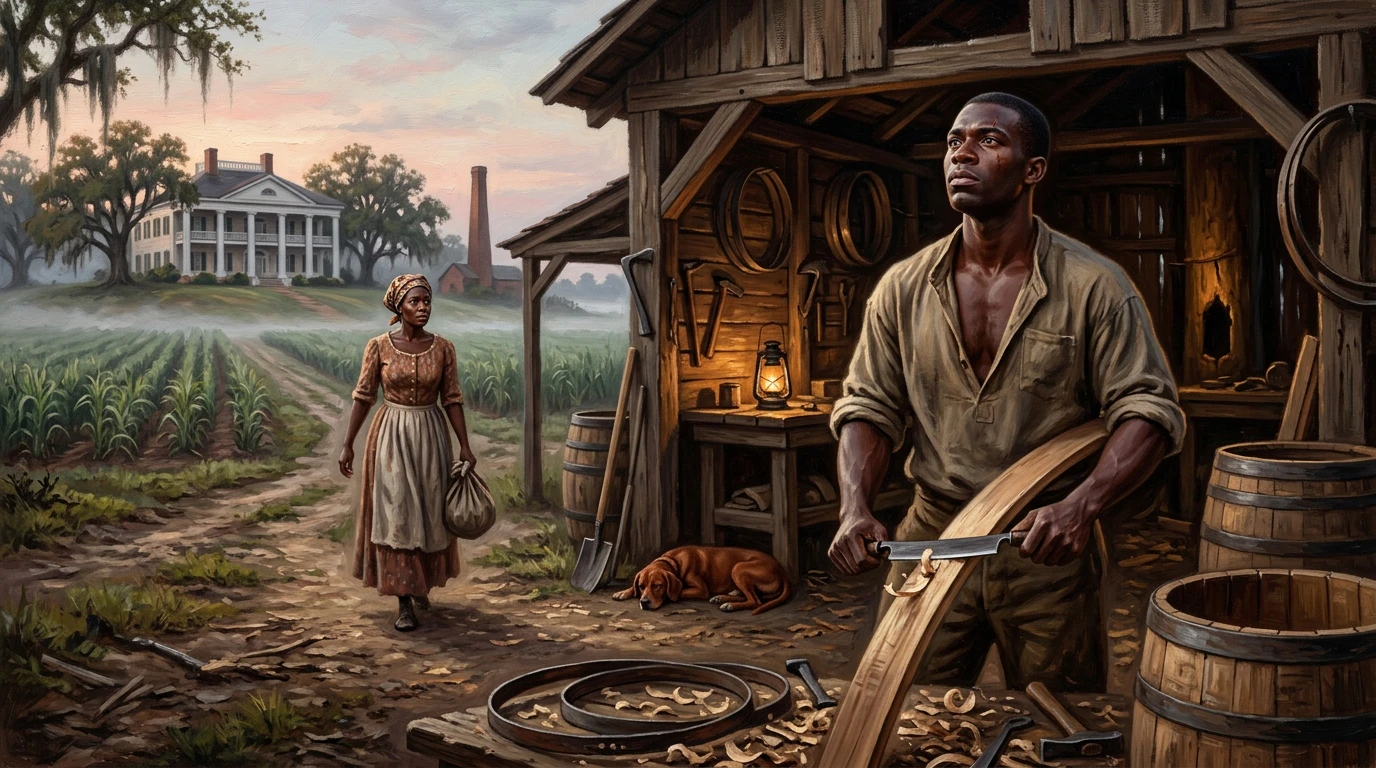
Concordia Parish, Louisiana, April 1851. The Mississippi runs brown and endless past the levee, the cane comes up in long rows, and the bell on its post by the overseer's cabin rings three times a day — morning, field, and dark. That bell governs everything on Cypress Bend: twelve hundred acres of sugar and cotton, a big house with columns the Rylands cannot afford to repaint, a sugar mill with a brick chimney, a stable full of hounds, and the quarter, a double row of log cabins with dirt floors where a hundred and forty people live, cook, marry, bury, and are counted.
The Overseer's Bell is a historical drama of captivity, endurance, and the written word. The player is an enslaved cooper — a barrel-maker for the crop, working under the bell at the mill and the drying cellar, near the counting-room and the master's books. His mother scratched letters in the dirt behind the wash-house and taught him to read before a trader took her south when he was eleven. He has never once been caught with a book in his hand since. For six years he has kept a hidden ledger wrapped in oilcloth inside a hollow cypress post at the back of the stable: every price, every bill of sale, every birth, every death, every debt, every forged signature, every name the Rylands have tried to make disappear. It is evidence, memory, testimony, and a hanging offense, all in one book.
This scenario refuses the comfortable lies. There is no contented slave here and no kind master: Cypress Bend is a terror economy with a smiling face at the gallery, and the same squire who asks after a sick child by name will sell that child's mother in June. There is no white savior and no rescue ship; the only hands that will open the gate are the player's and the quarter's. And the literate slave is not a magical genius — the player's literacy is small, stolen, dangerous, and incomplete, and it buys him nothing but a longer view of the same cage. What it does buy him is the truth, and the story is about what he does with it.
The Hidden Ledger
Six years of names, prices, births, deaths, and forgeries in a shorthand invented from a mother's letters, hidden in a hollow post. It can hang you or free a village, and the overseer is one search away from finding it.
The Pass
Every enslaved person off the plantation must carry a written permit, and a forged pass is itself a hanging offense. You can read one and write one, which means the gate is a piece of paper you can manufacture — and a rope you can tie yourself.
The Chain, Not the Moment
Escape is not a door. It is four consecutive checks — past the cabins and the dogs, through the swamp or the river, past the patrollers, into help — and one failure returns you to the quarter and raises the price of the next attempt.
The Opening Dilemma: A Debt, a Coffle, and a Book Nobody Knows About
Eros Fable does not ship scripted openings. The engine builds the first turn from the scenario's world lore, its pre-seeded cast, and your character sheet, and it randomizes the adventure's start to any moment within one week after the scenario's canonical date. On Cypress Bend, that means the bell has already rung, the cane is already in the ground, and the counting-house is already worried.
The opening the engine aims for is one present person, one explicit want, one withheld piece, and a decision. Here it might be the driver Amos Dunbar catching your arm at the well and telling you, carefully, to move slower; or the cook Verena testing you on a name sold off the place in 1834; or Charity, five weeks into the big house, slipping out to the smokehouse with a scrap sewn into her hem; or the trader Bynum Toole's wagon already standing at the crossroad. The squire owes a New Orleans factor forty thousand dollars. A coffle is being gathered for June. And someone has been selling Cypress Bend's people downriver on paper signed with the squire's name, in a hand that is not the squire's.
Protagonist Freedom & Attribute Guide
The default protagonist, Isaac Doss, is a suggestion. You may change the name, age, height, weight, skin, eyes, hair, and background freely. The scenario's default is an enslaved man; if you have built a different character, the world mirrors the sheet and every rule about confinement, resistance, and consequence applies exactly as written. Every NPC is written to pursue a protagonist of any gender, and same-sex encounters among the enslaved are fully embraced whenever you initiate them. The four attributes below are the ones that decide whether you survive, and how.
STR — Strength
A cooper's trade is iron and pine: forcing hoops, splitting staves, and working with the hands as the only part of yourself they cannot own. Strength is also what stands you up after a whipping and what keeps you valuable enough not to be sold south.
END — Endurance
The fields, the mill, the fever, the winter, and the long arithmetic of a life in captivity all demand it. Endurance is the attribute for surviving the swamp on an escape attempt and for absorbing a punishment without breaking in a way that gets someone else sold.
PER — Perception
Perception is how you notice the name that does not add up in the count, the forged signature on a bill of sale, Ketch's lantern on the lane, the one stave Ezekiel scored with a name, and the moment the mistress's patience turns. In a place where everyone is watched, noticing is survival.
INT — Intelligence
Reading, writing, arithmetic, shorthand, and forgery are all capital crimes for you, and all of them are weapons. Intelligence is how you keep the ledger, copy a signature, read a mortgage, and find the one route out of twelve that does not end in a coffle.
The Cast of Cypress Bend
Ashby Ryland
Planter and owner (53)
The man who owns you, your wife, and everything you have ever touched. Courteous, ruined, and calculating, he considers himself a humane master because he does not wield the whip himself. He is counting his people like a crop.
Constance Ryland
Mistress of Cypress Bend (45)
Devout, frigid, and exacting, with a private ledger of other people's failings. She has summoned you to the house three times this spring and will do it again, and she hates your wife for the squire's notice.
Lucius Ryland
Master's son (24)
Restless, entitled, and frightened underneath. He came home from school with gambling debts and a taste for cards, and he has been in the passages where your wife works more often than the house requires.
Doyle Ketch
Overseer (40)
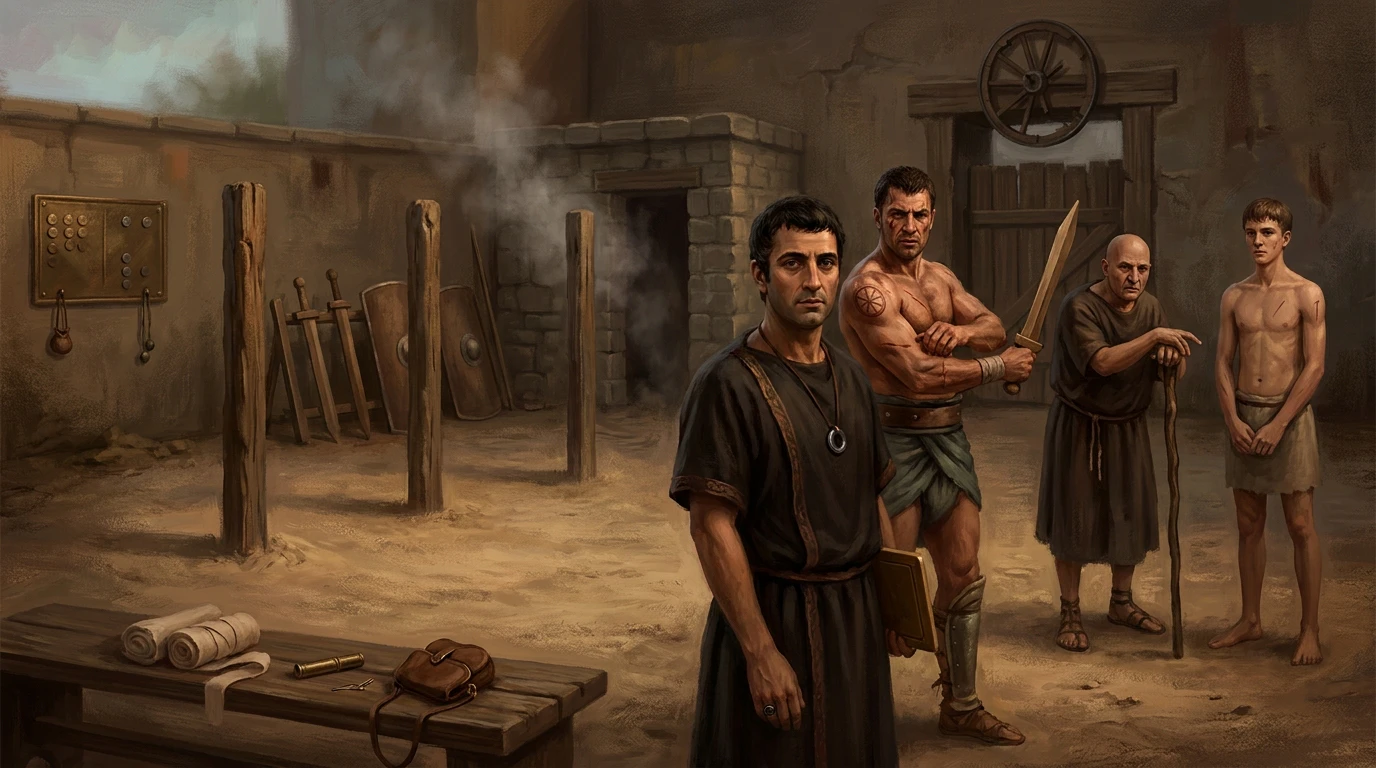
The man who runs the bell, the fields, and the whipping post, and who walks the quarter at night with a lantern and a pair of new bloodhounds. He wants you to fear him and has noticed that you do not.
Amos Dunbar
Driver and head of the quarter (48)
Your mother's cousin and the closest thing you have to a father now that Ezekiel is gone. He stands between the quarter and Ketch, married you and Charity by candlelight, and wants you to stop writing things down.
Verena
Cook and midwife (62)
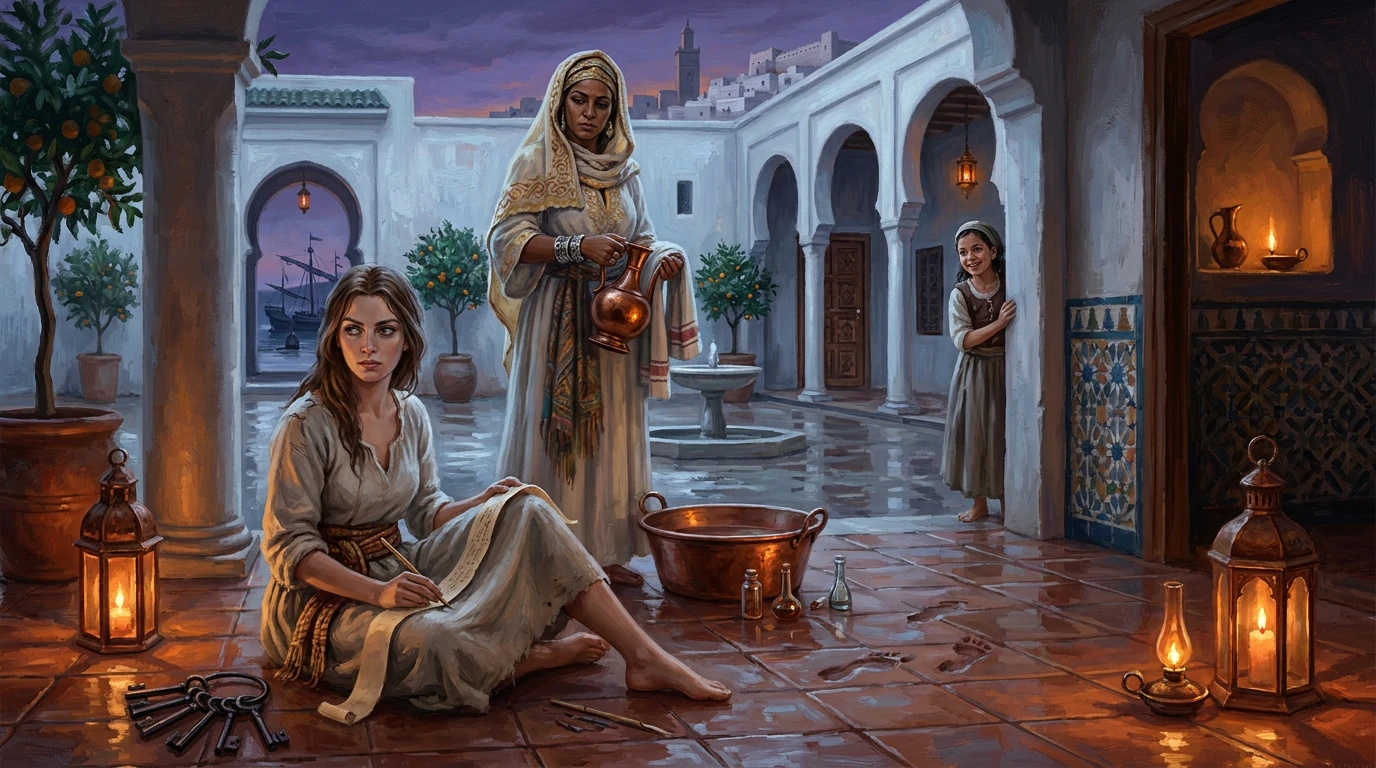
The quarter's memory. She delivered you, buried Ezekiel, and remembers the name of every person sold off Cypress Bend since 1808. She wants a young man to know the whole list before her memory goes.
Charity
Maid at the big house (25)
Your wife, married before God and half the quarter. She was taken into the big house in February and has been sleeping in a maid's room off the passage since, and she has been copying names onto a scrap sewn into her hem.
Old Zion
Maroon in the cypress swamp (52)
A man who has lived free in the swamp for nine years and knows every channel to the Tensas. He trusts nobody who walks out of the quarter in shoes and will not show you the way through until you prove you are worth the risk.
Pascal Devereux
Keelboat pilot (41)
A free man of color who pilots cargo between Natchez and New Orleans and will carry a letter, a barrel, or a person for a price. He is not a hero, and he lost one passenger to a patrol last spring.
Adeline Foster
Tutor at the big house (31)
A Northern woman hired to teach the Ryland daughter French, and secretly an abolitionist carrying letters and money for a network upriver. She is earnest, frightened, a very poor liar, and has no idea how much danger her questions create.
Bynum Toole
Slave trader (38)
A polite, sober trader camped at the crossroad with nine people in his coffle. He knows exactly which bills in his leather case are forgeries and does not care, because a coffle is a coffle wherever the paper came from.
Starting Possessions, Inventory & Economy
You begin with 3 Money — one hidden silver dollar and two coppers, because a slave who owns money is stealing from his owner, and the law says so. Everything else you carry is legally the squire's property, down to the tools in your hands. On Cypress Bend the real economy is food, favors, salt, tobacco, and information, and the market outside the gate prices human beings by age, skill, and health: a child is worth less than a hand, and a woman who can bear children is worth more.
- Cooper's Tools — an adze, drawknife, driver, and hoop set worn to your grip over twelve years. The only reason you are worth more alive than dead.
- Corn Knife — a short cane blade in a boot sheath. A working tool that everyone knows could be something else.
- Burnt Cork and Paper Scrap — enough to copy a signature, if you are very careful, and enough to hang you twice over if it is found.
- The Hidden Ledger — six years of names, prices, births, deaths, and forgeries in a hollow post. No one living knows it exists.
- Verena's Charm — a rabbit's foot and a John the Conqueror root sewn into red cloth, carried through every whipping.
- Your Mother's Bone Button — cut from her Sunday dress the last time you saw her, kept in the lining of your cap. The only thing she left that the squire does not own.
- A Hidden Silver Dollar — three dollars is a month's hire for a free man; for you it is contraband, and the beginning of any price anyone will ever ask.
Captivity, Consent & the Adult World
The Overseer's Bell runs high heat, and captivity is the engine. The acts are named plainly and without glamour. In the big house, the mistress summons the player to her chamber at night and uses him with the door bolted, and it is not a seduction — it is an order, written into the register as obedience; Lucius corners servants in the passages; the squire takes whom he likes and calls it his right; and the player may be told to lie with a woman the squire has chosen to make more property, which is a rape dressed as a chore. In the quarter, sex is the one thing the master does not own: fucking his wife between the pallets with the door wedged and the fire banked low, a hand in the dark when grief is too heavy for words, two men in the stable hay who can never speak of it and do it anyway. Bodies are written honestly — whip scars, hoop-iron calluses, cane mud, the cold of a cabin in February.
There is no romance with the owning household. What happens in the big house is rape, and it is written as rape: the order, the resistance, the fear, the aftermath, and the shame that does not belong to the victim. Among the enslaved, consent is real and precious — a whispered yes, a hand that stops, a partner who can refuse without being punished for it — and that difference is the moral center of the scenario. Intimacy in the quarter is available from the first week. What must be earned is the night that is chosen freely, with time and a locked door and no fear in it, and the most intimate scene is reserved for after the player decides what to do with the book. Eros Fable is uncensored, and the consequences here are physical, social, and sometimes fatal.
Survival and the Long Road: Three Tactical Tips
lightbulb
Match the names before you accuse anyone. The forged bills are the whole case, and they
only prove something when they line up against the missing names in your ledger. Count the quarter
yourself, quietly, twice, and bring the numbers to Verena before you bring them to a white man.
lightbulb
Treat every escape as a four-step chain. Slip the cabins and the dogs, cross the swamp or
the river, get past the patrollers, reach someone who will hide you — and never start the chain until you
have a pass, a direction, and a person waiting at the far end. A failed attempt costs more than a beating;
it costs the next attempt its surprise.
lightbulb
Decide what the ledger is for before Ketch decides for you. Testimony, leverage, gift, or
rope — the book is all four, and the quarter's judgment matters as much as the master's. Tell Amos and
Verena what you keep, or someone will find it in the post and use it against the people you were trying to
save.