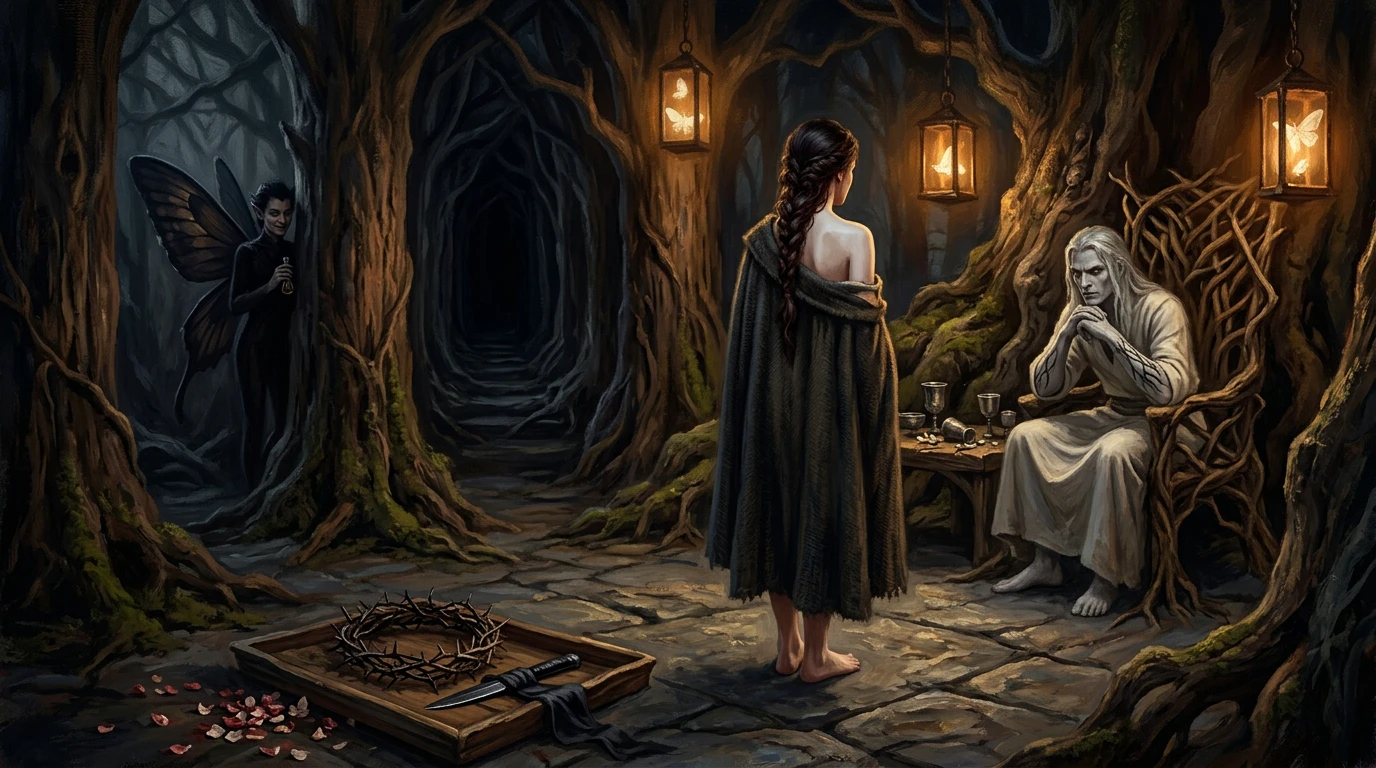
This scenario contains: blackmail, rape.
London, 1816: The Year Without a Summer
It is the coldest spring anyone living can remember. The snows of the Americas have reached England, the Thames is cold in April, the wheat is failing, and the bonfires at Vauxhall feel like an act of defiance. In Mayfair the market goes on regardless, because the Season does not care whether the world is ending as long as the invitations go out.
The ton runs on three currencies: birth, connection, and reputation. A lady's virtue is her bank — and her virtue is not her body but the appearance of it. A single unguarded moment behind a half-open door can strip her of marriage, income, and standing in a week, because the difference between a wedding and a ruin is very often one servant's testimony.
A Season of Ruin hands you both sides of that knife. Your father, a respected barrister, was hanged six years ago for a fraud he did not commit: a letter of credit drawn on the Admiralty's account for a ship called the Siren that was never built. The name was broken, the estate sold, and you and your younger sister were taken in as wards by the Marquess of Deerhurst — a man who holds your dowry, has already borrowed against it, and has his own plans for both of you.
You have one Season to marry respectably, one dowry entirely in another man's hands, one sister who cannot be allowed to end in service, and one uncomfortable suspicion you cannot put down: that your father was the only honest man in the entire transaction.
The Season Is a Public Examination
Balls, dinners, the opera, the promenade in the Park, the country house party. Who dances with whom, who leaves early with whom, and who is seen doing either is public information — and it is all being read by people with long memories and nothing else to do.
Letters Are the Real Language
A note left on a tray can start a ruin or stop one. Invitations, vouchers, settlements, and evidence all travel as folded paper, and sooner or later everyone in Mayfair reads everyone else's correspondence.
The Truth Is Still in a Box Somewhere
The real builder's contract, a second letter of credit, and the name of the man who drew the money out of the Admiralty's account. Three people hold pieces of it: the Duke of Rothbury, the Marquess of Deerhurst, and the anonymous writer every household in London reads with breakfast.
The Opening Dilemma: One Season, Five Ways to Begin
Your story begins on 9 April 1816, at 20:15, at the first great ball of the Season. The engine draws one of five opening hooks at random, so no two Seasons start the same way:
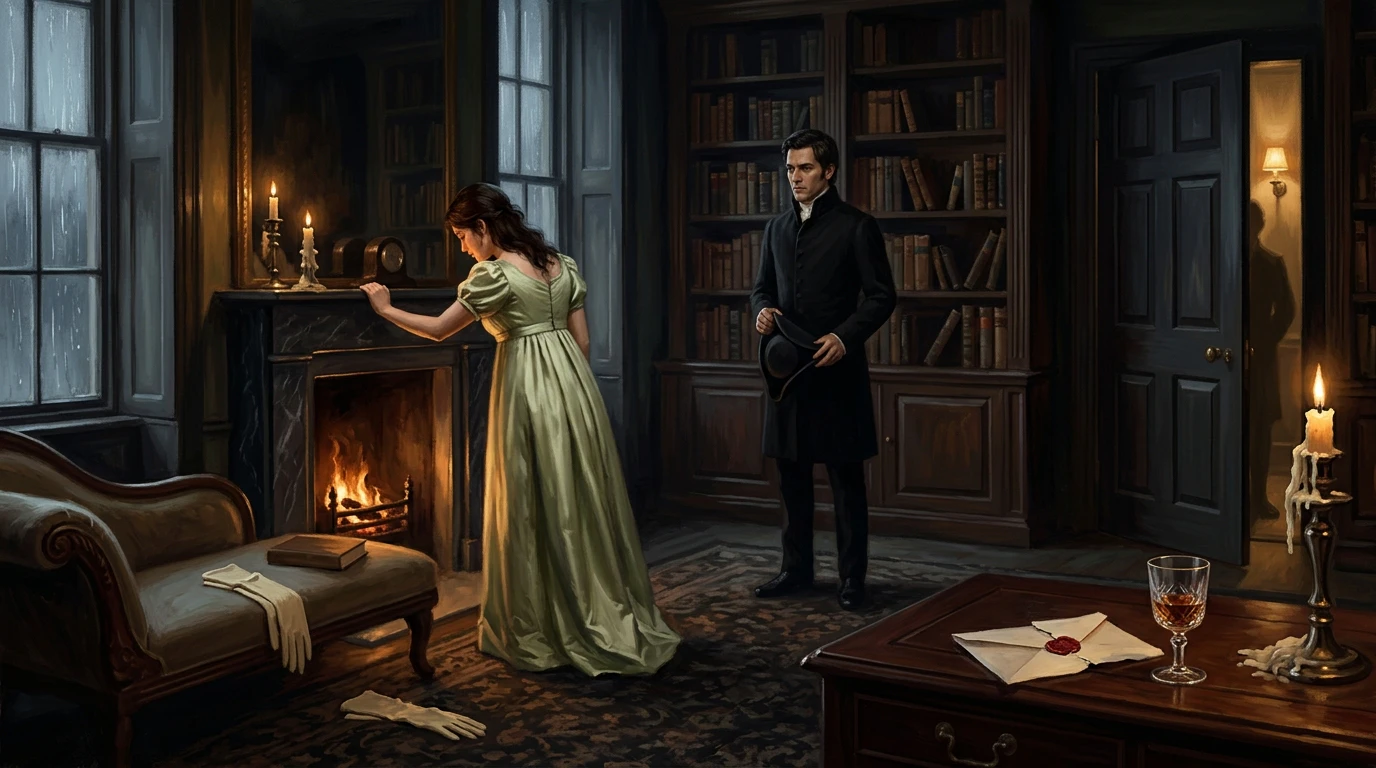
- The Compromising Situation (non-consensual): Mr. Grange has arranged to be found with you in the library — the door ajar, a footman bribed to bring witnesses. He means to have his hand up under your gown when the door opens, so the choice is a ruined marriage or nothing at all, and he is not interested in your answer.
- The Duke's Bargain: A footman brings a note at midnight: the small blue drawing room, alone. Rothbury has the proof that would clear your father's name and will hand it over — if you let all of London believe he is courting you, and spend tonight in that room with the door shut while the house sleeps.
- The Rake's Note: On your pillow at the house party, in a careless hand: the orangery, midnight, wear the green. Lord Nathaniel Ashworth waits between the lemon trees with the lamp turned down, tells you plainly what he wants, and admits he cannot offer marriage.
- The Patroness's Price: Lady Cordelia Wexford offers you her vouchers, her protection, and her patronage of your sister's come-out — in exchange for seducing the Duke of Rothbury for her, reporting every word he says, and allowing her to watch the first of it from behind the screen.
- The Pen's Price: Miss Prudence Skeffington, who is 'Lady Gossip', has the second half of your father's case in a locked box, and will print it either way. What she wants first is the whole truth, told to her in person, over the course of one night.
Protagonist Freedom & Attribute Guide
The default character is Eleanor Ashby, twenty-four and six Seasons into a disgrace she did not earn — and the scenario is written with complete protagonist ambiguity. The lore, the love interests, and the cast pursue a protagonist of any gender: a male ward of the Marquess reads perfectly, and same-sex encounters are fully embraced whenever you initiate them. Change the name, the age, the gender, and the appearance freely.
CHA — Charm
The ton is a room of people deciding what you are worth, and it decides by ear. Charm is quick dialogue, a good exit, the ability to be liked by someone who has already decided to dislike you, and the only thing that ever changed a duke's mind.
PER — Perception
Nobody in this world says what they mean. Perception catches what the Duke stops himself from saying, which footman has been paid, which of your father's letters mentions the Siren, and precisely who is standing in the doorway watching.
INT — Intelligence
The mystery here is paperwork: a letter of credit, an inventory that omits a contract, and a signature that does not match. Intelligence lets you read a settlement for the trap inside it, price your own dowry, and out-argue the men who hanged your father.
AGI — Agility
Regency London is not a safe place to be a woman without protection: a library, a carriage on a dark road, a hunt, a terrace at the wrong moment. Agility decides whether the compromising situation happens to you or to the man who arranged it.
The Cast: Nine People Who Will Decide Your Season
Adrian Hargrave, Duke of Rothbury
Duke of Rothbury (33)
Cold, exact, and frighteningly well informed. He says less than anyone in the room and means all of it, does not flirt, does not explain, and never once asks for something he is not willing to pay for honestly. He holds the papers that would clear your father and has held them for six years.
Lord Nathaniel Ashworth
Viscount Ashworth — Rothbury's Closest Friend (29)
A genuine rake and a genuine friend. He says the true thing in rooms where the true thing is fatal, has spent ten years keeping Rothbury's secrets, and will not pretend his intentions toward you are honorable — which makes him the most honest man in Mayfair.
Lady Georgiana Ashworth
Debutante — Nathaniel's Sister (19)
Warm, indiscreet, and braver than she looks. She adopts you within an hour, defends you loudly in rooms where you are not present, and passes on gossip with an accuracy no one taught her to control. She is your door into every drawing room in Mayfair.
Lady Cordelia Wexford
Marchioness of Wexford — Patroness of the Season (53)
Brilliant, merciless, and genuinely entertained. She has launched eleven Seasons and buried four husbands, and she regards marriage as a market, virtue as a currency, and the whole arrangement as a comedy performed for her benefit.
Mr. Percival Grange
Merchant Banker & Creditor (47)
Patient, avaricious, and entirely without shame. He built a fortune lending to gentlemen who could not pay, and he collects their houses, their heiresses, and their votes in that order. He has decided that a ruined barrister's daughter is the cheapest respectable wife in London.
Alice Ashby
Your Younger Sister (18)
Headstrong, funny, and more perceptive than anyone credits. She has decided she will not be married off to save anyone, has been secretly exchanging letters with a penniless lieutenant, and has been reading your father's papers behind your back.
Mrs. Pollard
Ladies' Maid & Chaperone (42)
Dry, loyal, and unshockable. She knows exactly what men do when the candles burn low and exactly when to knock and when not to. She has been saving a letter from the man who testified against your father for six years and will produce it when it matters.
Miss Prudence Skeffington
Bluestocking — Anonymous Scandal Columnist (31)
Witty, watchful, and much angrier than she appears. She publishes as 'Lady Gossip' because a man's name sells columns and a woman's name invites the pillory. She has half your father's case in a locked box and has been waiting two years for someone from the family to come and ask.
The Marquess of Deerhurst
Your Guardian — Holder of the Dowry (52)
Genial, lazy, and quietly contemptible. He has spent ten years selling off small pieces of other people's futures to keep the appearance of a great house. He is the softest link in the whole chain, the easiest to break, and genuinely fond of you in the way one is fond of a clock that still works.
Beyond the seeded cast the AI generates everyone else: patronesses, fortune hunters, moneylenders, Bow Street runners, servants who hear everything, and the men who sat on your father's jury.
Starting Possessions & the Economy of a Ruined Name
You begin with 140 Money — a small allowance, kept in a workbox, and a wardrobe that passes in candlelight:
- Muslin Day Dress — white muslin with the sleeves re-trimmed twice to look newer than it is. In daylight it does not (value 25).
- Ball Gown (Pale Green) — cut to the current mode, paid for with the last of your mother's pearls, the only thing you own that looks like money (value 180).
- Ivory Fan — it hides a mouth, a blush, and a laugh, in that order, and every lady in the ton reads its language fluently (value 15).
- Your Father's Miniature — worn on a ribbon under your clothes. On the back, scratched with a pin: the Siren, the fourth letter, Hargrave knows (quest item).
- Bundle of Your Father's Letters — eleven letters from a hanged man to his daughters. Four of them mention the Siren and a builder who was never paid (quest item).
- Beaded Reticule — handkerchief, vinaigrette, a few coins, and a letter you have not yet decided how to deliver (value 30).
- Dog-Eared Gothic Novel — scandalously sensational, borrowed and never returned, and the only thing that reliably calms your sister (value 5).
Money buys gloves, chair-hire, and a decent seat at the opera. Everything that actually matters in this Season — an introduction, a voucher, a rumor killed before it spreads, a judge's attention — is bought in favors, and everybody in Mayfair keeps a ledger.
Adult Themes, Romance & the Rules of the Ton
- Restraint is the heat. This scenario's own directives demand the slow burn: gloves, eyes across a ballroom, the exact distance a hand can travel in public. The first full encounter belongs around a third into the arc, never in the opening scene, and the wanting has to be paid for in patience first.
- Interiority first, always. Action, thought, sensation, want, fear — in short alternating beats. In a world where nothing can be said out loud, the unsaid is half the conversation, and the scenario instructs the Game Master to write it.
- Forbidden by class as much as by desire. A duke and a hanged man's daughter. A rake who will not offer marriage. A patroness who wants to watch. A guardian who owns the dowry. There is a live prohibition in every scene you share with anyone, and it does the work explicit content cannot.
- Consent as whispered negotiation. When two people want each other, they say out loud what is permitted tonight, what must wait, and what must never be told — no fade to black and no coy euphemism; the acts are named plainly.
- Darkness and consequence. A creditor who arranges to be found with you, a rake who has never been denied, a carriage on a dark road. Coercion and attempted rape are part of this world, written unflinching and never resolved into romance.
- Content warnings. Reputation ruin, forced marriage and blackmail, obsessive behavior, explicit sex, attempted rape, class cruelty and debt, grief and a wrongful execution, and a great deal of brandy.
And it is a romance: it ends where the best of them end — a choice made freely, a man who proves he can be chosen rather than simply obeyed, a name restored or deliberately abandoned, and a life that was worth the scandal.
Tactical Tips for Surviving the Season
lightbulb
Get your sister married before you get yourself married. Alice is the
reason you signed anything, and she is also the easiest target in London — unprotected,
romantic, and already writing letters to a penniless lieutenant. Every Season you leave
her exposed is a Season Grange has a lever.
lightbulb
Do not let the Duke decide for you. Rothbury is not the villain of this
story, but he is not your ally either — he has held the truth for six years because it
was convenient to hold it. Accepting his protection without a price is how you end up
being chosen for rather than choosing.
lightbulb
Writers and maids see everything. Mrs. Pollard has been in service to
your family since your mother's time, and Miss Skeffington prints the one document
everyone in Mayfair reads. Both of them know more than a duke does, and both of them
respond to patience and honesty far better than to flattery.